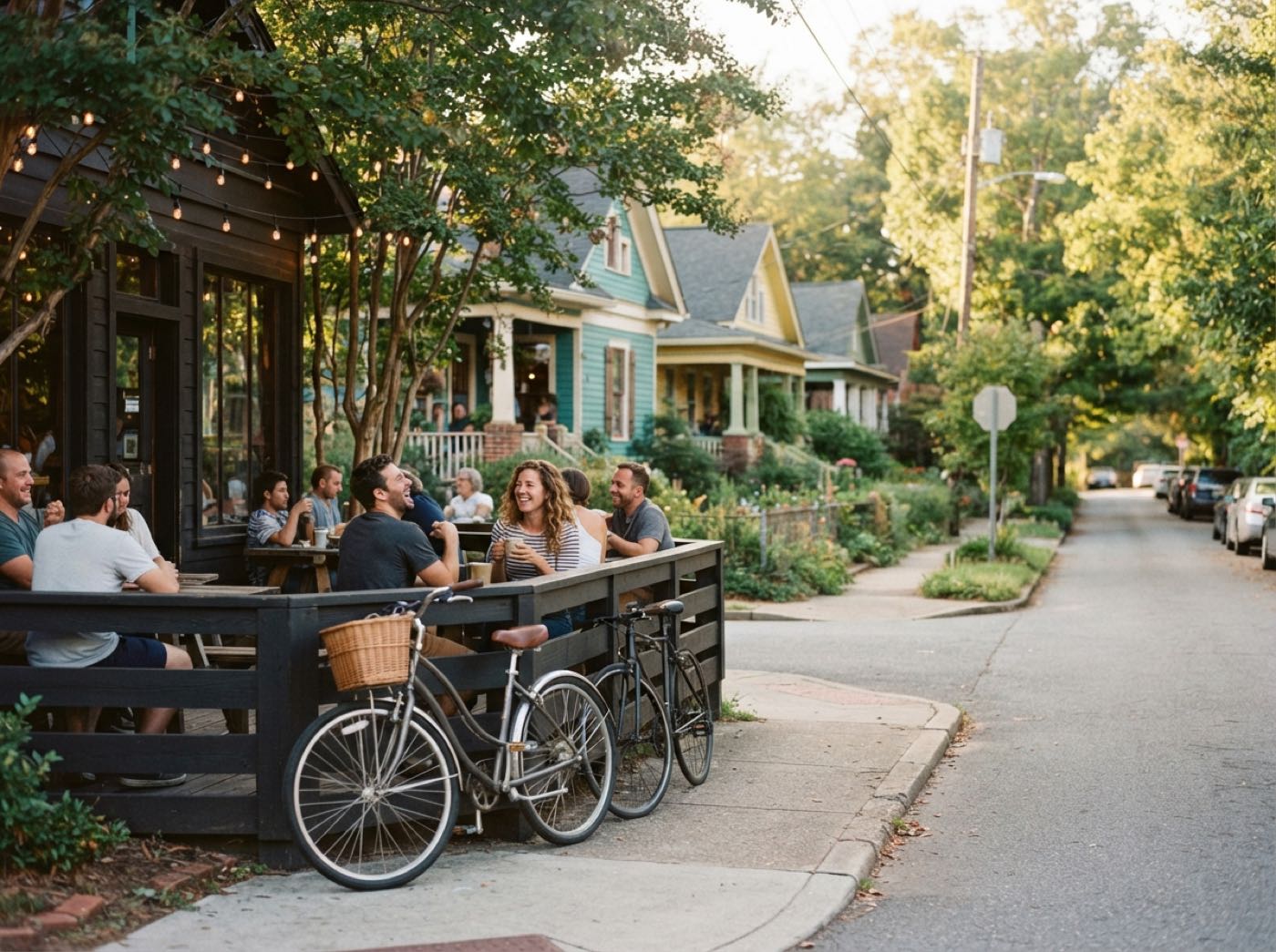
A walkable pocket on the west side of town — 1920s bungalows and newer infill, with Haywood Road as the spine. Most sales this year are between $425K and $700K, and downtown is about ten minutes away.
West Asheville is the kind of neighbourhood where people say "I'm going out" and mean walking three blocks. The streets are tight, the houses are close to the sidewalk, and the trees form canopies that make even a Tuesday afternoon feel a little cinematic.
The housing stock is mostly 1920s bungalows, with newer infill houses tucked between them — the kind of careful modern builds that hold their own next to a hundred-year-old neighbour. Haywood Road is the spine: coffee shops, small music venues, the locally-owned density that makes a neighbourhood feel like a small town.
The $425K–$700K range reflects most sales in West Asheville over the past year. The bungalows tend to sit at the lower end; the newer infill and the renovated ones at the higher end. For anything specific — a house you've seen, or a block you're curious about — give me a call.
Downtown Asheville is about a ten-minute drive from most of West Asheville, depending on the time of day and which intersection you hit. Haywood Road itself is walkable for most of its length — coffee, dinner, a hardware store, a bookshop or two.
One thing buyers ask me about: flood zones near the river. The French Broad runs along one edge of the neighbourhood, and a few blocks sit close enough that flood insurance and elevation certificates become part of the conversation. It's not a deal-breaker for most people, but it's worth knowing on the front end, not after you've fallen in love with a house.
Haywood Road is the centre of gravity, and most of the neighbourhood is within a fifteen-minute walk of it — for coffee, dinner, or the hardware store.
The 1920s bungalows have the kind of trim and ceiling height that newer houses don't. The infill houses have the kind of light and layout that older houses often don't. Either is on the table.
Ten minutes is close, but it's not "walk to the office" close. If you're in the centre of town often, the drive adds up.
It's a real thing to look into for a few blocks, not a reason to walk away, but worth understanding before you write an offer.
I'll write back the same day with real words. Or call (828) 555-0142 if you'd rather talk it through.