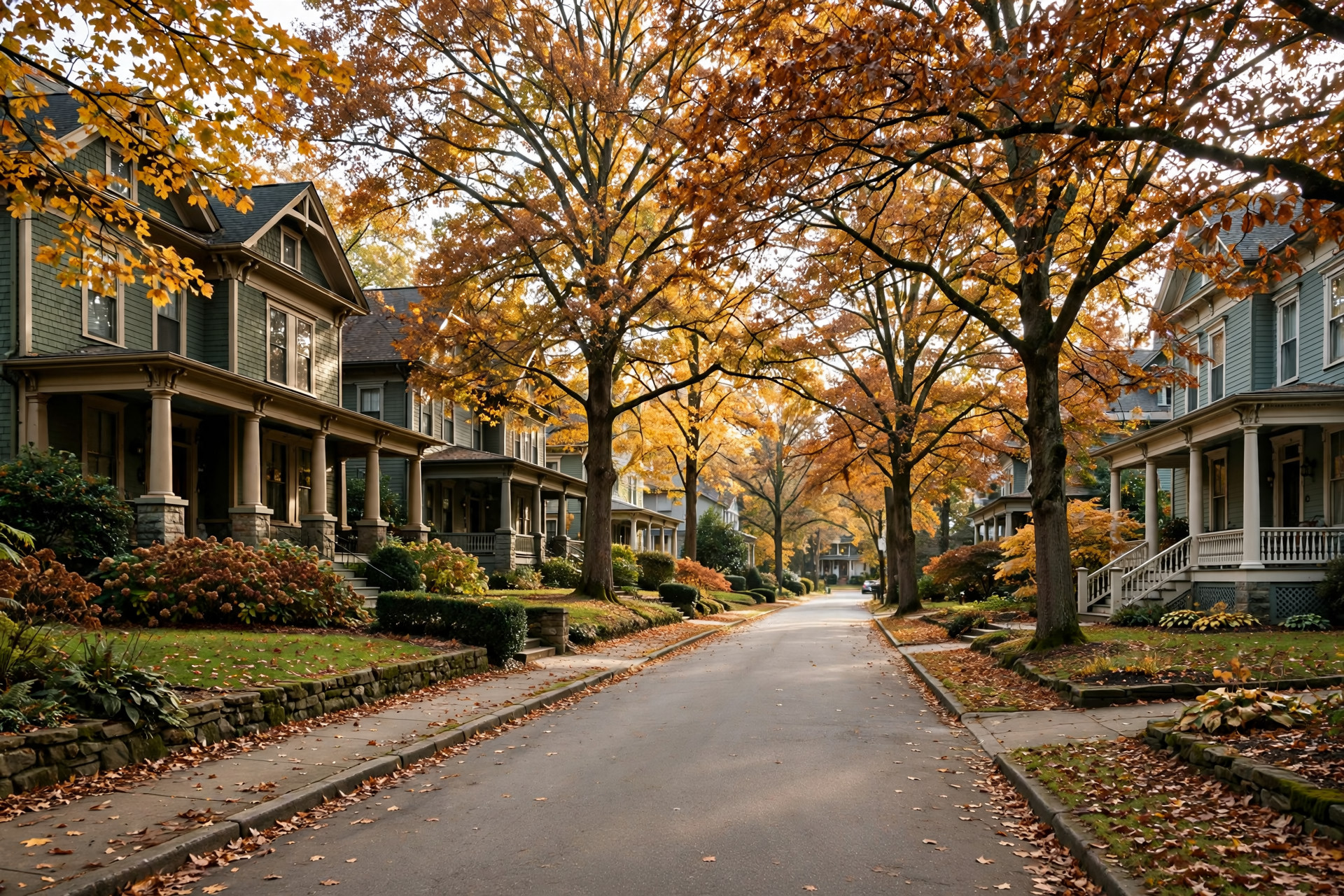
1920s–1950s brick and craftsman homes on big leafy lots, near UNC Asheville and the Grove Park Inn. Most sales this year are between $550K and $1.1M, and Merrimon Avenue is the main commercial strip — about ten minutes to downtown.
North Asheville is the part of town that feels most like what people picture when they say "established neighbourhood." The housing stock is brick and craftsman from the 1920s through the 1950s, set on the kind of big leafy lots that the rest of Asheville mostly doesn't have. The streets feel quieter, the trees feel older, and the houses sit further back from the sidewalk.
You're close to two of the most recognisable landmarks in town — UNC Asheville and the Grove Park Inn — without being in either's shadow. It's the area of the four I work that feels most "suburban," in the gentle sense, without ever quite becoming suburban.
The $550K–$1.1M range reflects most sales in North Asheville over the past year. The houses at the lower end tend to be the smaller brick and craftsman bungalows; the higher end is the larger two-stories and the renovated mid-century homes. For anything specific, give me a call.
Merrimon Avenue is the main commercial strip — groceries, coffee, the kind of errands that don't require getting in the car twice. Downtown Asheville is about a ten-minute drive, depending on traffic and which end of the neighbourhood you're on.
Two things buyers ask me about: steep driveways, because the hills in North Asheville are real, and older sewer lines, which some of the houses still have and which can affect both insurance and renovation plans. Neither is a deal-breaker, but both are worth knowing going in.
The big leafy lots give you room to spread out — a real garden, room for a tree house, space between you and the neighbours.
If you're visiting, working at, or sending a kid to UNC Asheville, or if the Grove Park Inn is part of your regular life, being nearby is a real quality-of-life thing.
1920s–1950s houses have the kind of build quality and proportions that newer construction often skips. They also sometimes have the kind of single-pane windows and outdated wiring that newer construction doesn't.
The steep driveways are part of the charm and part of the trade. Worth knowing in winter.
I'll write back the same day with real words. Or call (828) 555-0142 if you'd rather talk it through.